
Epoxy vs. Polyaspartic Garage Floors in North Dakota: Cost, Cure Time and Winter Installs

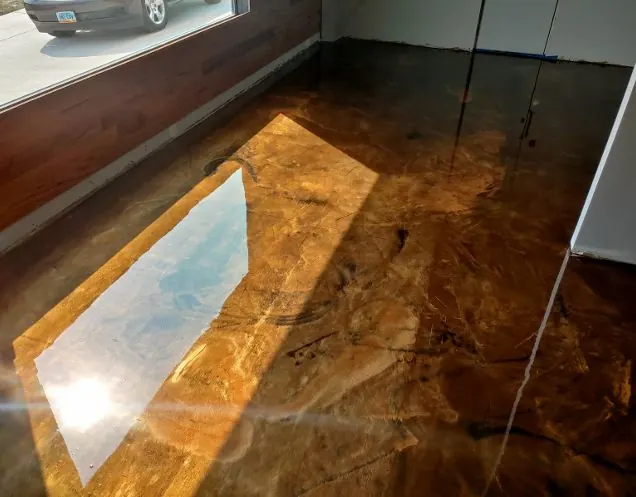
Who this is for: Bismarck-Mandan homeowners who want a coated garage floor that holds up to road salt, slush and hot tires, and who want to know which coating fits and whether it can go down in winter.
The short answer
Both epoxy and polyaspartic can last in a North Dakota garage, and the prep under the coating matters more than the name on the can. Epoxy usually costs less and gives the installer more working time, but it needs days before you park on it and it can yellow in sunlight. Polyaspartic is often ready for a car in about a day and stays color-stable, but it sets fast and usually costs more. Many floors use both: an epoxy base under a polyaspartic topcoat.
For a winter install, the slab temperature decides. Most data sheets for both coatings call for floor and air at 50°F or warmer, with the floor at least 5°F above the dew point. An unheated garage in a Bismarck January is nowhere close.
To see finished floors, our page on epoxy and flake garage floor coatings in Bismarck-Mandan shows finished epoxy floors, including metallic, decorative flake and high-gloss looks.
Epoxy vs. polyaspartic at a glance
| Epoxy | Polyaspartic | |
|---|---|---|
| Minimum install temperature | 50°F floor and air | 50°F on most products; a few cold-weather products list lower |
| Working time once mixed | Longer (about 30 minutes on one primer's data sheet) | Short: about 10–15 minutes at 77°F |
| Walk on it | About 12 hours at 68°F, 24 hours at 50°F | About 4 hours at 77°F |
| Ready for a car | Several days; full cure about 7 days at 68°F, 10 days at 50°F | About 24 hours at 77°F |
| Sunlight | Discolors over time in UV light | UV-stable, resists yellowing |
| National installed cost | About $3–$12 per sq ft | About $4–$9 per sq ft |
| Common role in a system | Primer and base coat | Topcoat, or the full system when speed matters |
The epoxy figures come from Sika's data sheet for Sikafloor-264 Thixo (2025) and the working time from APF's Epoxy 100 primer. The polyaspartic figures come from APF's Polyaspartic 7500 data sheet (2025). Products differ, so the data sheet for the exact coating on your floor is the one that counts.
The cost ranges are national. This Old House puts professional epoxy at $3–$12 per square foot (updated March 2026, from HomeAdvisor and Angi data), and Bob Vila puts polyaspartic at $4–$9 (2024). Prep usually moves the price most: grinding, crack repair, oil removal and moisture control.
We don't publish a per-square-foot price for garage coatings yet, because the slab decides most of the cost. To price your garage, we need the area, whether there's old carpet glue, paint or sealer on it, the cracks and spalling, any moisture problems, and the finish you want.
What a North Dakota garage does to a floor coating
Salt and slush
Every winter the City of Bismarck buys brine salt, deicing sand and a liquid calcium chloride deicer for its streets. It rides home in your wheel wells and melts onto the garage floor. Deicers make freeze-thaw damage to bare concrete worse, and the Pennsylvania Aggregates and Concrete Association notes that sealers help by keeping chloride-laden water from soaking into the slab. A well-bonded coating does the same job.
Still, squeegee or rinse salt water out during the winter, and fix chips before brine gets under the edges. A smooth, high-gloss floor can be slick with snowmelt on it, so ask about flake or an anti-slip texture in the topcoat.
Hot-tire pickup and tire marks
Hot-tire pickup is when warm tires soften the coating and pull it off the concrete. One coatings supplier, Polycote, lists the usual causes: concrete that was only cleaned or acid-etched instead of mechanically profiled, moisture rising through the slab, and thin coatings without a wear-resistant topcoat. In other words, it's mostly a bond and build problem, not a product-name problem.
Tire marks are different: plasticizers in the rubber migrate into the coating as hot tires cool, and the stains can show up on almost any coating (ArmorPoxy). They're cosmetic, and parking pads help.
Sun through the open door
Epoxy "will discolor over time when exposed to sunlight," in Sika's words; APF describes its polyaspartic as UV-stable. If your door faces south or west and stays open on summer afternoons, plan on a UV-stable topcoat.
Prep decides whether it peels: grinding vs. acid etching
When a garage coating peels, the bond to the concrete failed, which is why prep matters more than the coating choice. Sherwin-Williams says most coating manufacturers no longer recommend acid etching: it tends to leave a shallow, uneven profile, it adds water to the slab, and it can't remove oily deposits or curing compounds. The alternative is diamond grinding or shot blasting.
The data sheets agree. APF calls for a minimum ICRI concrete surface profile of CSP 2–3 on both its epoxy and polyaspartic, and states that acid etching "will void manufacturers' warranty." Sika's surface preparation guide adds that diamond grinding makes a lot of dust and needs a capable dust collector. A proper prep usually covers:
- Grinding the whole floor to the profile the data sheet calls for
- Filling cracks, chips and spalled spots
- Removing old paint or sealer (water that beads up points to a sealer, as one manufacturer's data sheet notes)
- Waiting on new concrete: APF wants it cured at least 30 days
Coating manufacturers generally call for diamond grinding with dust collection; acid etching is a weaker shortcut. Standard prep is part of the job; major concrete repairs or moisture mitigation are priced separately when a slab needs them.
Older garage slabs: oil and moisture
An older garage floor has usually seen years of oil drips, and oil keeps a coating from bonding. Sika's prep guide lists scrubbing with a heavy-duty degreaser, low-pressure water or steam cleaning, then a pH check to confirm the contamination is gone. Where contaminants can't be removed, the guide says the contaminated concrete "must be removed and replaced." For a deep stain under where the engine sat for years, that can mean cutting out and patching that spot.
Moisture is the other hidden problem. Three common tests:
- Plastic sheet (ASTM D4263): a square of plastic taped to the slab for 18 to 24 hours, as Sika describes it. Moisture under the sheet is a warning sign, not a measurement.
- Calcium chloride (ASTM F1869): measures how much water vapor comes out of the slab, in pounds per 1,000 square feet per 24 hours.
- Relative humidity probes (ASTM F2170): measure humidity inside the slab through drilled holes.
Limits depend on the product. APF calls for a vapor-control system above 85% relative humidity; another maker's polyaspartic sealer wants under 75% and no more than 3 pounds of vapor emission. Sika adds that the slab should sit at normal conditions for at least 48 hours before testing, so in winter, let the snowmelt dry first.
Before an older garage is priced, it should be checked for oil stains, old sealers and signs of moisture.
If a basement floor is also on your list, our guide to LVP, tile or epoxy for a basement floor covers testing a slab below grade.
Can you coat a garage floor in a North Dakota winter?
Yes, but only in a garage that can be heated and held at the data sheet's temperature before, during and after the install. Bismarck's normal January high is 23.2°F and the normal low is 2.4°F (National Weather Service, 1991–2020 normals). A slab in an unheated garage sits far below the 50°F most coatings need. What a winter install takes:
- Heat the slab, not just the air. Cold slows the cure: Sika's epoxy needs about 10 days to fully cure at 50°F versus about 7 at 68°F, so the heat stays on through the cure.
- Watch the dew point. Warm, moist air over a cold slab can condense on it. Sika's guide keeps the floor at least 5°F above the dew point.
- Skip fuel-burning heaters. Sherwin-Williams warns that combustion heaters add moisture and carbon dioxide, which can cause amine blush, a film that can act as a bond breaker between coats. Electric or vented heat is the safer route.
- Dry the slab first. Keep the cars out for a few days so melted snow can dry before testing and coating.
Some polyaspartics are made for the cold: one low-temperature product lists a minimum of -20°F, noting that cold lengthens the cure. The dew point and dry-slab rules still apply, so for an unheated garage, late spring through early fall is the easier window.
In winter, a garage can only be coated if it can be heated and held within the product's temperature range before, during and after the install; otherwise the job waits for spring.
Which one fits your garage?
- Choose epoxy if budget comes first, you can keep the car out for several days, and the floor gets little direct sun (or a UV-stable topcoat).
- Choose polyaspartic if you need the garage back the next day or sun hits the floor.
- Choose a combination for both: an epoxy primer or base coat, flake if you like the look, and a polyaspartic topcoat. APF, for example, describes its Epoxy 100 as "a primer for all systems."
Questions to ask before anyone coats your garage floor
- How will you prepare the concrete, and to what CSP profile?
- Will you test for moisture and oil, and what limits does the product allow?
- Which products are going down, and can I see their data sheets?
- When can I walk on it and park on it, at the temperature my garage will actually be?
- What does the warranty cover if the coating peels or lifts under the tires?
For that last one, see our guide to what a remodeling warranty should spell out.
Frequently asked questions
Is polyaspartic better than epoxy for a garage floor?
Not across the board. Polyaspartic cures faster and resists yellowing, so it suits garages that need a quick turnaround or get sun. Epoxy usually costs less and gives more working time. Many floors combine them. Either one fails early if the concrete isn't ground, clean and dry.
Can you epoxy a garage floor in the winter?
Only if the garage can be heated so the slab and air stay within the product's range, usually 50°F or warmer with the floor 5°F above the dew point, through the install and the cure. Avoid fuel-burning heaters. In an unheated North Dakota garage, plan for late spring through early fall.
How long before I can park on a new garage floor coating?
It depends on the product and the temperature. One polyaspartic data sheet lists vehicle traffic after about 24 hours at 77°F; one epoxy data sheet lists a full cure of about 7 days at 68°F. Ask for the times on your exact product at your garage's temperature.
How much does it cost to coat a garage floor?
Nationally, professional epoxy runs about $3–$12 per square foot (This Old House, 2026) and polyaspartic about $4–$9 (Bob Vila, 2024). Local prices vary, and prep often makes the biggest difference. A written estimate after someone sees the slab is the only reliable number.
Thinking about a coated garage floor? Send the garage dimensions and photos of cracks, oil stains or peeling coating. The estimate will identify the preparation, the coating system and when that floor can take foot and vehicle traffic. Call or text Viktor at (701) 329-9659 with your town, photos and what you want to change. Our office follows up during business hours. You can also request a free written estimate through the form on this page.
Planning a epoxy floors in Bismarck–Mandan?
Free in-home consultation and a written estimate before any work starts.
Related guides
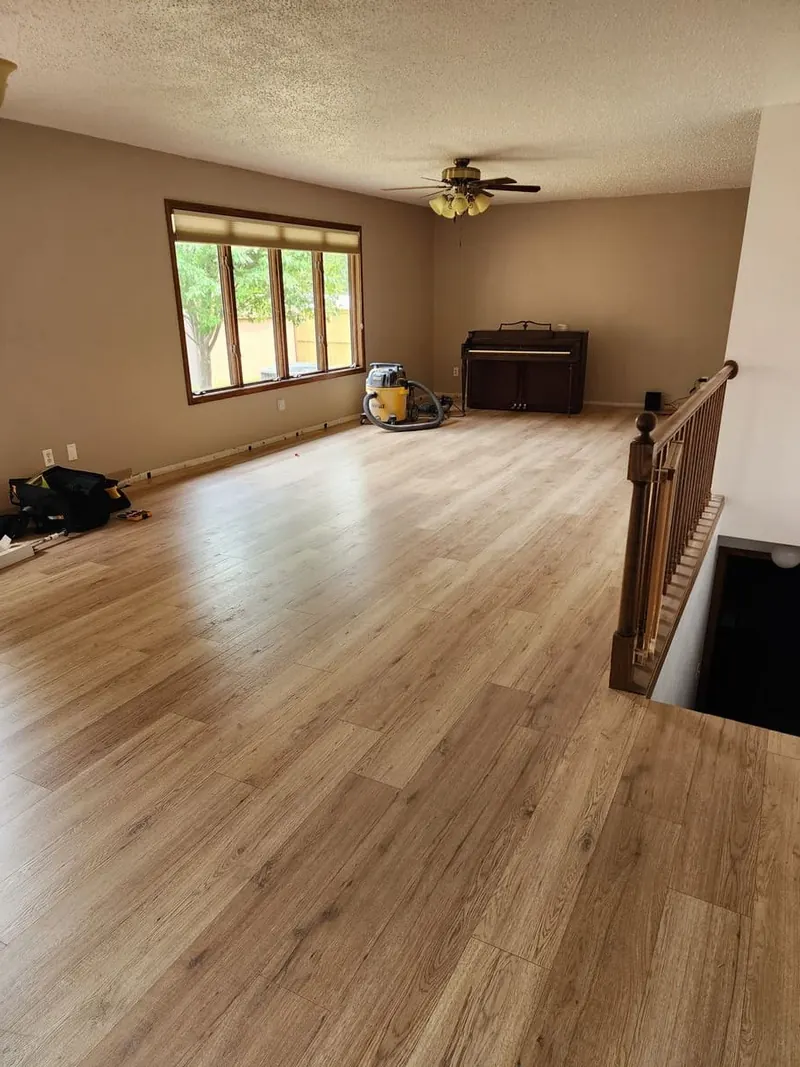
LVP, Tile or Epoxy: The Best Flooring for a North Dakota Basement
For most basement living space, luxury vinyl plank (LVP), including rigid-core versions often sold as SPC, is the best default: it…
Read the guide
Home Remodeling Warranties: What's Actually Covered (and What Isn't)
A remodel is usually covered by two separate warranties: a product warranty from the manufacturer, which covers defective material…
Read the guide
Not ready to talk yet? Browse our catalog first.
Showers, bathrooms, basements, kitchens and floors we build, with the options and materials explained in plain English. We send it to your inbox. No calls.
Get your free estimate
Takes about a minute. Our office follows up during business hours; Viktor confirms the visit and the written scope.

Viktor, your general contractor, coordinates your estimate
- Our office follows up during business hours
- Free in-home consultation in Bismarck–Mandan
- Written estimate before any work starts